

MOASEI FAQ
Have a question? Open a issue on our GitHub, or send a email to us (see MOASEI webpage for contact info).
Competition Logistics
Track #1 Cybersecurity
How do the number of patched, exploited, and vulnerable states affect the simulation?
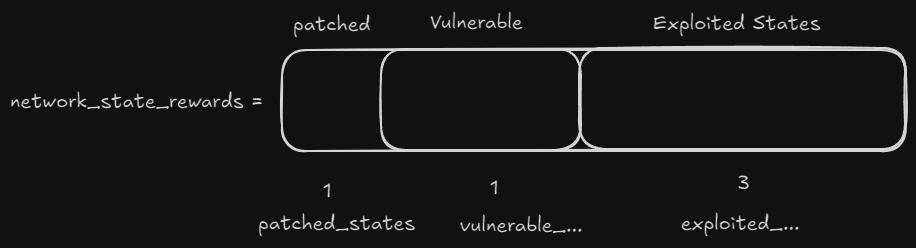
These are three kinds of states that each node can be in. Nodes transition from state to state as defenders patch, and attackers exploit. This will shift nodes between these states, and accordingly shift rewards.
Note, Attacker recieve -1 * rewards, thus encouraging them to create deeply exploited nodes.
What does importance mean?
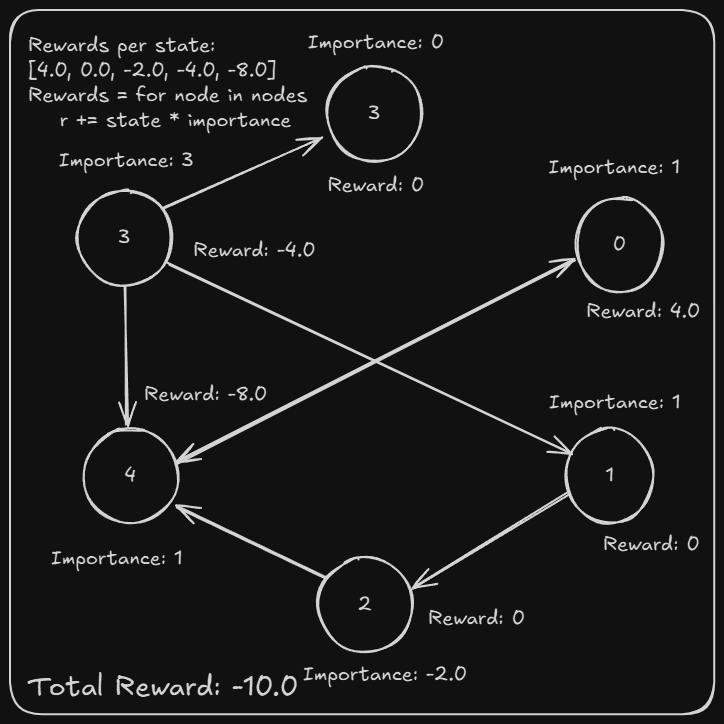
Importance is a measure of the number of outgoing edges from each node. This
multiplies the reward of that node, so a node with zero outgoing edges doesn’t
impact the rewards at all.
What does include_x mean?
We use the parameter include_x to indicate whether this agent should
observe other agents’ attributes. For cybersecurity presence, and power
determine whether we show if other agent’s are present in the environment, and
the network power of those agents in the others attribute of the observation.
For the purposes of MOASEI 2026, use the include_x or observe_other_x as
shown in Environment
Initialization.
Track #3 Wildfire
How does the equipment transition work for the bonus round?
In the wildfire environment, each agent’s equipment can be in one of four states, representing its condition:
Fully repaired (pristine)
Intermediate state 1
Intermediate state 2
Fully damaged
For the competition, only the maximum suppressant capacity of an agent is affected by equipment state. The rules are as follows:
Fully repaired (pristine): The agent’s maximum suppressant is increased by 1 (+1 modifier).
Intermediate states (1 & 2): The agent’s maximum suppressant is unchanged (no modifier).
Fully damaged: The agent’s maximum suppressant is decreased by 1 (-1 modifier).
Equipment state transitions are handled by the environment and occur
stochastically. Agents may degrade their equipment through use, suffer critical
errors, or repair their equipment when they perform the noop action.
This mechanism encourages agents to maintain their equipment in good condition to maximize their firefighting effectiveness, while also introducing strategic considerations around equipment management and resupply.